Last Updated | June 4, 2026

According to predictions, by 2026, AI chatbots for eCommerce will be no less than essential, stepping over foundational support roles and taking a proactive part in enhancing every single aspect of the customer journey. It is essential to comprehend the main areas of chatbot application that will be preferred by eCommerce companies as they are determinative for increasing sales, tailoring experiences, and reducing customer support dramatically.
Why eCommerce Needs AI Chatbots in 2026
The adoption of conversational interfaces is a sign that the consumers have changed their way of communicating with technology fundamentally. Messaging apps like WhatsApp and Instagram DMs have become people’s main digital communication channels. Companies that do not communicate via these channels are putting themselves in the position of being ignored by the market.
The companies will treat every chat interaction as a source of data. This gives them the power to shift the approach from marketing to extremely personalized and customer-centric experiences. Picture a chatbot that remembers the size of a customer, his/her past purchases, and even his/her preferred style, and then shows the customer some recommendations that seem less like a sales pitch and more like a personal stylist’s selection.
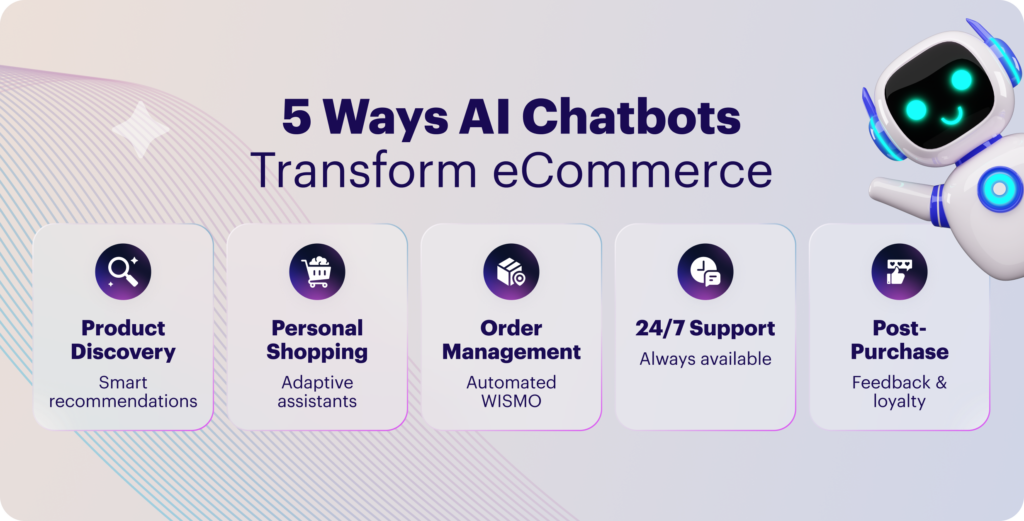
Product Discovery and Recommendation
In the year 2026, AI chatbots for eCommerce will be very well trained in assisting customers with large product ranges and will act as very knowledgeable salespeople who are always available. This is one of the main uses of chatbots which will be the major eCommerce companies to use this and increase the number of sales.
The chatbot does not wait for a customer to ask but instead, it starts interacting depending on the customers’ browsing activities. The chatbot suggests products and offers high-quality images and hyperlinks thereby making the customer’s selection more interactive.
This way, it reduces the eruption of customer indecision, increases the average order value (AOV), and most of all, it remarkably enhances the chances of sale since it matches the buyers with the right products much quicker than before.
Personalized Shopping Assistants (Rewritten, Natural Version)
By 2026, AI shopping assistants are expected to evolve into highly adaptive tools that recognize each shopper’s preferences, habits, and past behavior – not just recommend random items.
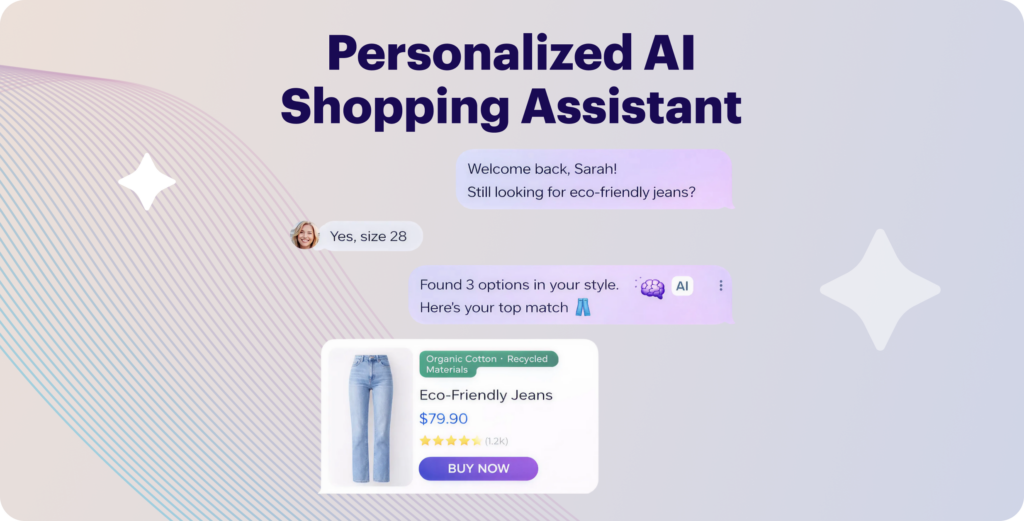
Here’s what this looks like in practice:
- when a returning customer signs in, the assistant greets them by name and brings up relevant details from past browsing or purchases. Instead of generic prompts, it might say something like “welcome back, Sarah – still looking for eco-friendly jeans, or maybe a matching top this time?” The assistant can answer product questions, compare items, and even check stock availability for specific sizes or colors
- when the interaction feels personal and relevant, shoppers tend to stay longer, enjoy the experience more, and come back again. This strengthens loyalty and increases the likelihood of repeat purchases
According to a FICO customer-experience survey, 88% of respondents say that the experience a brand provides matters just as much – or more – than the product itself.
Automated Order Management and WISMO Queries
The “Where Is My Order?” (WISMO) inquiries still constitute a significant burden on support staff. However, the chatbots’ role in this scenario will be nearly wholly automated by 2026, so the use case will be of utmost importance for eCommerce to get the most out of chatbots. All it takes is for customers to either type or say their order number or email address and the chatbot will with no delay connect to your shipping and order management systems.
This, in turn, allows the support agents to concentrate on more complex queries, brings the AHT down to a very low level, and provides the customers with instant reward which in turn leads to increased customer satisfaction.
Post-Purchase Engagement and Feedback Collection
The customer’s journey certainly does not finish at the payment. The whole process would not be able to function properly without chatbots that will still be very much alive during loyalty building and providing important business insights.
At times, a chatbot could be in touch with the customer a couple of days after the product was received just to get opinions about the product, give tips on usage, or even suggest similar items. The chatbot might also take care of returns and minor issues at the same time collecting information on customer satisfaction.
What you get is not only a better customer experience overall but also a stress-free situation, important data for the product, and through consistent engagement more customers returning to your business.
Benefits of AI Chatbots for Online Retail
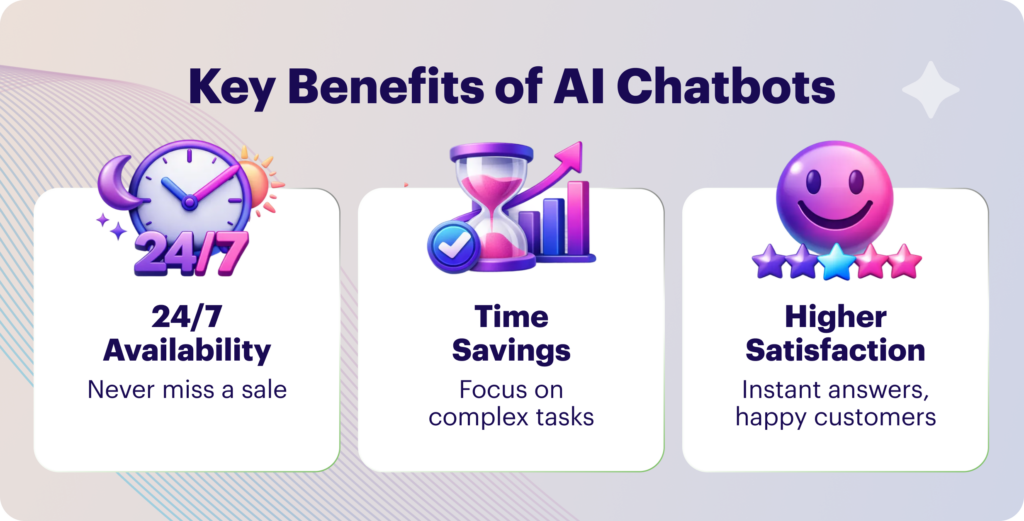
The employment of a chatbot in digital customer communication in retail is a quick return on investment. Previously, suitable solutions had to be designed individually and with much effort; however, chatbot providers now offer adaptable options for a fixed monthly charge. Depending on the size of the organization, the number of chat channels, and the languages available, there is a suitable and lucrative solution for every requirement.
Around-the-clock Availability
While personal customer support hours are typically limited in the evenings, on weekends, and on public holidays, a chatbot is available 24/7. No nightly or holiday surcharges. Customers who only shop online after work in the late evening hours may ask their digital contact person inquiries. This decreases the likelihood that they may disrupt their customer journey and possibly end up with the rival.
Time Savings Through Chatbots in Retail
Chatbots perform repetitive processes, respond to frequently requested queries, and handle personal interactions with clients. Instead of wasting time answering the same questions, staff can concentrate on more sophisticated activities that require experience, expertise, and human knowledge.
In addition, there are positive client experiences, such as getting their questions answered swiftly and becoming regular customers or making recommendations.
Improving Customer Satisfaction and Customer Loyalty
Customers today have high expectations for a shop’s service. They value easy navigation to the chosen product, prompt responses to product-related concerns, and quick customer care response times. Using a chatbot, retailers can meet these expectations and even gain a significant competitive advantage.
How to Set Up AI Chatbots on Shopify and Magento
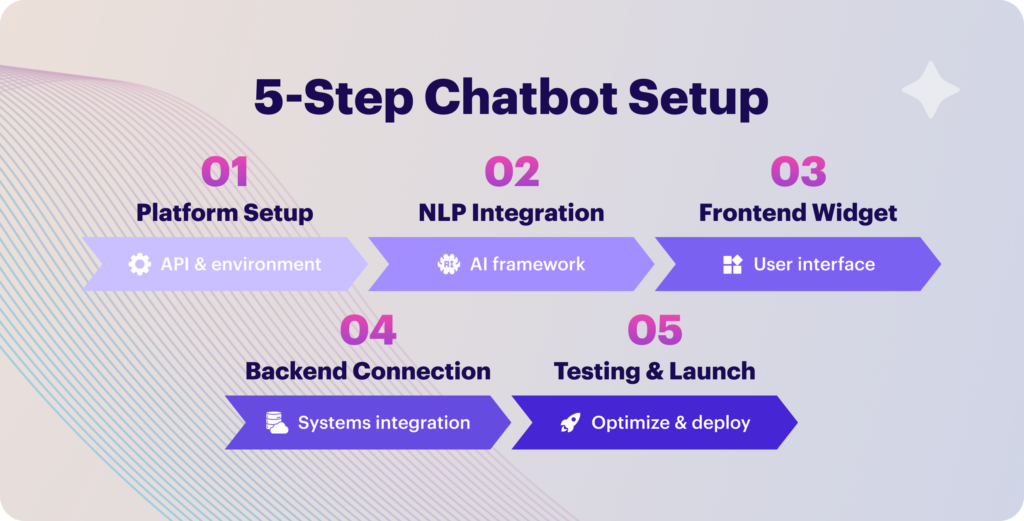
Integrating a well-designed eCommerce chatbot setup into your business can help you increase conversion rates and expedite customer assistance. Whether you’re employing a simple rule-based bot or powerful conversational AI eCommerce, adhering to best practices will help your AI assistant meet your clients’ demands while also driving income.
Step 1: Platform and Architecture Setup
Confirm your eCommerce platform version (Shopify Plus, Magento Open Source or Commerce) and the API access level required for chatbot integration. Then:
- provision a staging environment to test chatbot deployment before moving to production.
- select hosting or middleware for the chatbot backend, such as cloud functions, a Node.js server, or serverless architecture.
In the end, set up secure API keys and OAuth tokens for Shopify Admin API or Magento REST API to ensure safe communication between systems.
Step 2: Chatbot Framework and NLP Integration
Choose an AI/NLP engine (e.g., Dialogflow CX, IBM Watson Assistant, OpenAI GPT, Rasa) to drive conversational understanding. Then:
- define an intent taxonomy and entity extraction schema tailored to eCommerce scenarios like product search, order tracking, and FAQs.
- implement session management and context storage for per-user conversation history, cart state, and customer metadata.
Configure fallback and escalation flows, allowing seamless handoff to live agents when AI confidence is low.
Step 3: Frontend Integration
Embed the chatbot widget or iframe into the storefront theme (Liquid templates for Shopify, PHTML/JS for Magento). Then:
- ensure responsive design and mobile compatibility to maintain a smooth user experience.
- integrate real-time user events such as clicks, cart updates, and search queries for dynamic, context-aware responses.
And validate that context-aware responses trigger appropriately based on user action, ensuring seamless handoff to backend systems and fallback flows if needed.
Step 4: Backend and eCommerce System Integration
Connect the chatbot to the product catalog API to deliver up-to-date product recommendations. Then:
- integrate with order management systems to provide tracking and status updates.
- sync user data with CRM or marketing automation tools (e.g., Klaviyo, Salesforce, HubSpot) to enable personalized engagement.
You have to ensure secure handling of PII and compliance with GDPR/CCPA regulations.
Step 5: Testing and Optimization
Unit test all API calls and intent triggers for correctness. Then:
- perform load testing to handle concurrent user interactions.
- monitor performance metrics such as response latency, intent recognition accuracy, and fallback rates.
Run A/B tests on conversation flows to optimize engagement and conversion rates.
Best AI Chatbot Tools for eCommerce Stores
A chatbot for online stores are classified into various categories based on their complexity and capabilities:
- Rule-based chatbots, such as ManyChat, Tidio (basic workflows), and Landbot’s pre-configured bots, provide structured interactions via predefined conversation flows, making them excellent for dealing with commonly asked queries and simple customer support requests. Despite their limited flexibility, they deliver consistent responses and work well for firms with simple support requirements.
- AI-powered conversational chatbots use natural language processing and machine learning to comprehend user intent and give more dynamic responses. Platforms like Chatfuel, IBM Watson Assistant, and Drift can handle complicated queries, change responses depending on context and consumer behavior, and interact with popular eCommerce systems like Shopify, WooCommerce, and Magento.
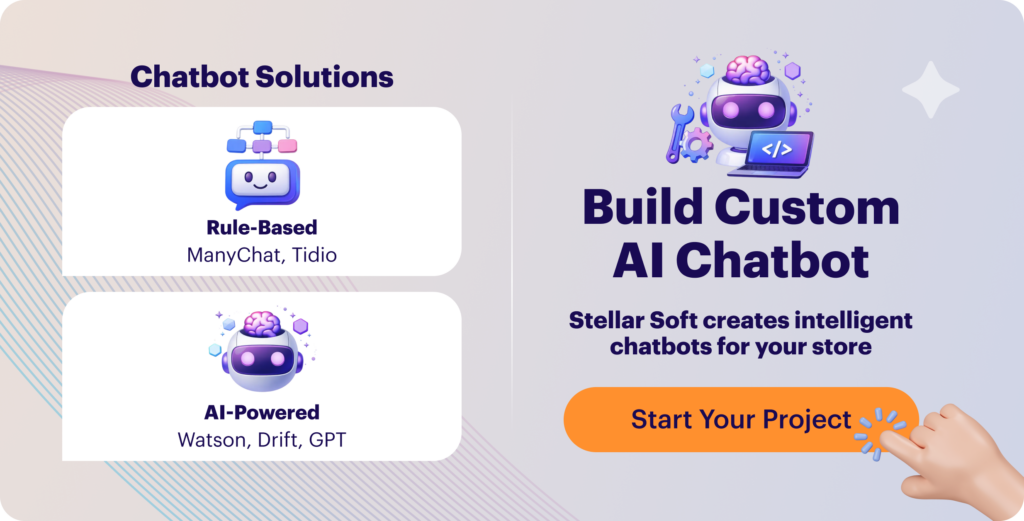
Platforms differ primarily in terms of integration capabilities with major eCommerce systems, AI intelligence levels, price methods ranging from per-conversation to enterprise licensing, and implementation difficulty.
From personalised product suggestions and automatic order tracking to real-time lead qualification and post-purchase engagement, these solutions improve the customer experience at every touchpoint. Businesses that integrate chatbot for online stores into their Shopify or Magento stores may reduce support workloads, increase conversions, and provide a true one-on-one purchasing experience that increases loyalty and revenue.
Are you ready to boost your online store with AI-driven conversational experiences? Partner with Stellar Soft to develop intelligent chatbots tailored to your eCommerce platform, streamline AI customer service, and open up new revenue prospects. Begin creating smarter interactions today.