Last Updated | October 8, 2025

Approximately 43% of all websites utilize WordPress, a free platform with open-source flexibility [1]. Since Shopify is mostly utilized for eCommerce websites, it is a little more specialized. However, it remains a widely used platform on over 4 million sites across 175 countries [2].
Both of these can be quite effective for eCommerce firms and have greatly reduced the entry barrier for novice website builders. We will compare eCommerce vs Shopify and their capacities in the following article.
Introduction to eCommerce and Shopify
For retail sales in a single market, language, currency, and sales channel, eCommerce provides a basic solution. It is a WordPress plugin that adds eCommerce features to the platform’s functionality. To increase the store’s functionality, a particular plugin vs app ecosystem has been created over time; however, more on that in a bit.
Conversely, Shopify products are made for retail vendors. It provides all of the fundamental features required for sales as well as extra marketing resources. Shopify is a great eCommerce platform for new sellers who require an easy-to-launch online store because of its user-friendliness.
Why Custom Integrations Matter in eCommerce
API documents are integrations. Your online store’s many software systems are connected by application programming interfaces. A hub is created where several applications can easily communicate and exchange information. There are two primary categories of eCommerce APIs:
- APIs for data sources. These give you access to your platform’s raw data, such as client information.
- APIs for products. These concentrate on particular things, like orders or products.
Custom integrations are the process by which modifications are made to one system. The customer experience is significantly enhanced, and data accuracy is strengthened by this real-time synchronization.
Common use cases for custom integrations
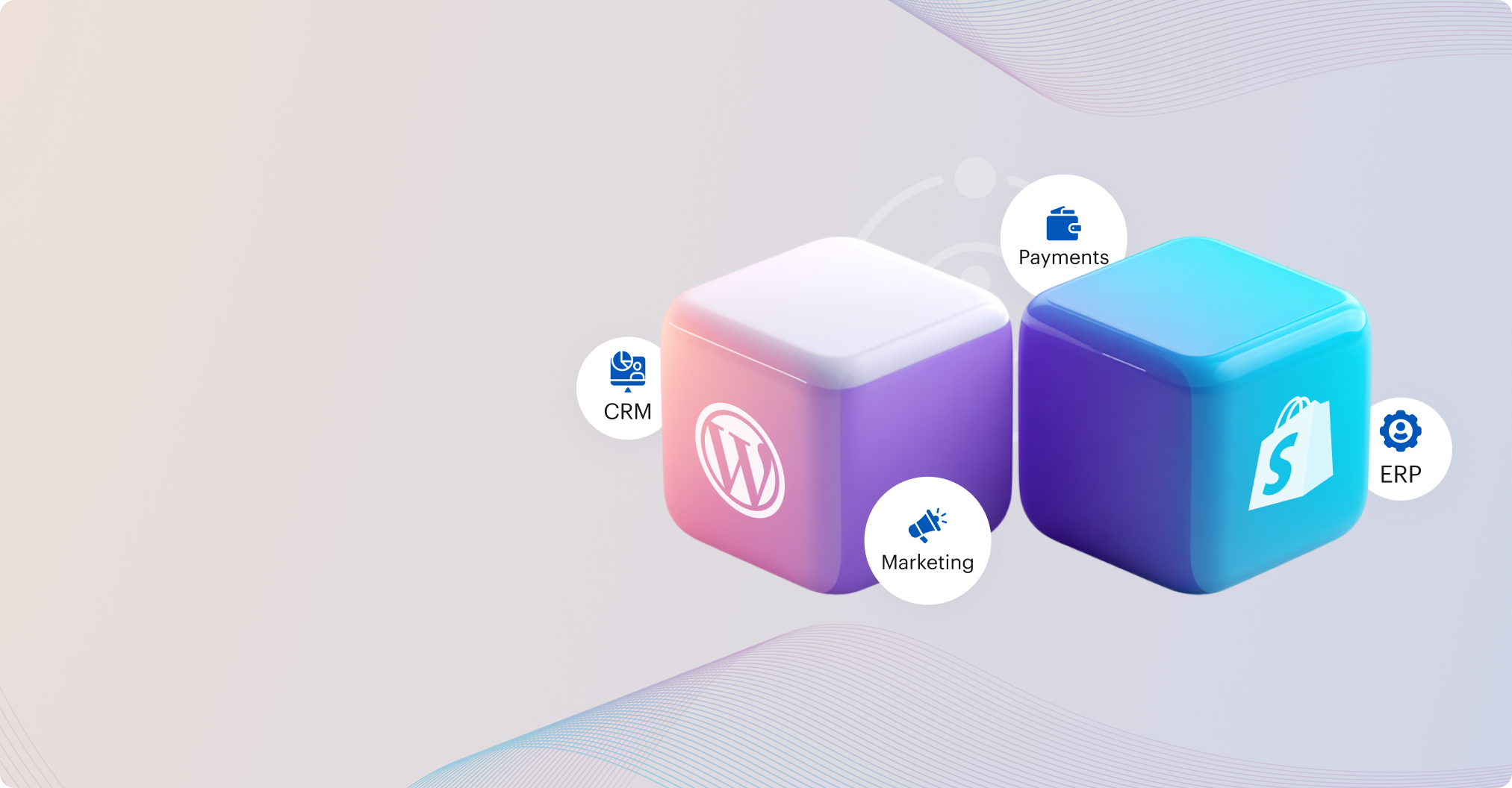
Even if your website is fantastic, it isn’t enough to drive purchases these days. To increase productivity and efficiency, you need to supercharge your company with more tech. The best instruments for this are custom integrations. These are:
- CRM. Assume you are aware of your clients’ identities and preferences. You can monitor their behavior, previous purchases, and even social media activity with a CRM integration. This enables you to send them customized emails, make product recommendations, and make exclusive offers.
- Enterprise Resource Planning (ERP). ERP is your company’s main mechanism. It keeps track of every procedure. ERP tracks orders, automatically adjusts stock levels, and even makes predictions about how much to order from suppliers when it is integrated with your online store.
Further, a variety of payment methods is valued by many contemporary clients. Digital wallets are used by some, while credit cards are used by others. Multiple transaction choices are supported by payment gateway connections. This strategy attracts more clients.
eCommerce Strengths in Custom Integrations
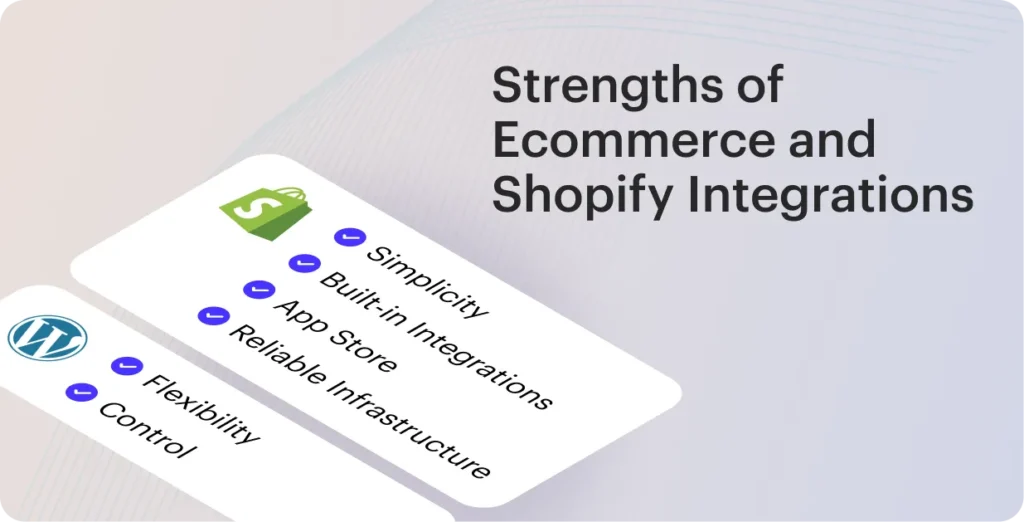
eCommerce’s open-source flexibility in design, which grants complete access to the underlying PHP and MySQL software, is one of its greatest advantages. Because of this, it is very flexible for bespoke interfaces with analytics platforms, CRMs, ERPs, and custom integrations that do not have built-in plugins.
Real-time data exchange with third-party tools is made possible by eCommerce integrations using REST and GraphQL APIs. Webhooks are also supported for event-driven automation, including syncing orders, updating inventory, and pushing customer data. Check out more implementation capabilities with Stellar Soft services.
Shopify Strengths in Custom Integrations
Through Shopify integrations, you may link the platform to other programs and platforms that your company utilizes. This can contain anything from shipping and inventory management systems to marketing tools and accounting systems. You can automate processes, save time, and enhance customer satisfaction with custom integrations.
The benefits of integrations:
- Automation: Make procedures like order processing, inventory management, and product information synchronization easier.
- Improved Customer Service: You can guarantee that consumers receive prompt and accurate assistance by integrating Shopify with customer service tools.
Through the Shopify App Store, Shopify offers a variety of built-in integrations that make it simple for store owners to link to well-known services like Google Analytics, Mailchimp, QuickBooks, and many more. However, Shopify’s API is a strong tool that allows you to create custom solutions if you have particular requirements that call for unique integrations.
See how we deploy Shopify third-party integrations in the Shopify Development Services.
Direct Comparison: eCommerce vs Shopify
Overall, there are benefits and drawbacks when opposing eCommerce vs Shopify. There is little to no possibility for personalization because they are limited to using a small number of the components that are accessible in a certain website theme.
| eCommerce Platforms Comparison | ||
|---|---|---|
| eCommerce | Shopify | |
| Flexibility & Scalability | Code-level access and complete open-source status enable limitless customization and sophisticated integrations. Development skills, caching, and hosting infrastructure all affect scalability. | SaaS that is extremely scalable and has integrated hosting, CDN, and worldwide infrastructure. Although it is limited in comparison to open-source platforms, flexibility is high through APIs and apps. |
| Costs of Integrations | Although the fundamental plugin is free, premium and custom development plugins can be expensive, and integration fees vary. Third-party tools, developer hours, and hosting all affect long-term expenses. | Monthly payments that are predictable, in addition to the price of premium apps and potential transaction fees. Reduced initial development costs, but at scale, recurring app subscriptions might get pricey. |
Choosing the Right Platform for Your Business
There is no one-size-fits-all solution, as is the case with most things in life. Your unique demands, priorities, and long-term business goals will determine the ideal platform.
Because eCommerce is open-source, you have total control over your online store. It provides more customization options and is less expensive to set up and operate.
Shopify, in contrast, is significantly simpler to use and requires no installation. They make it simple to arrange payment providers, and their price schemes are clear to understand.
To conclude, eCommerce is your best bet if you’re looking for an eCommerce solution that’s flexible, affordable, and gives you total control over your website. However, Shopify is the greatest option if you want to manage an online store without any hassles.
Conclusion
Despite being powerful eCommerce platforms, eCommerce and Shopify have different goals. Shopify provides managed scalability in online stores, user-friendliness, and dependable infrastructure right out of the box, whereas eCommerce shines in flexibility, bespoke integrations, and complete control over your stack.

Whether your company favors simplified growth or deep customization will determine the optimal option. With our technical know-how and practical insights, we at Stellar Soft assist brands in making these choices. For additional advice on creating more intelligent, future-ready eCommerce platforms, follow us.
FAQ
Which is better for custom integrations: eCommerce or Shopify?
eCommerce provides complete code-level access and flexibility for highly custom integrations because it is open-source and built on top of WordPress. Shopify has a strong API, but because it uses a closed SaaS architecture, it has more limitations.
Does Shopify support advanced third-party apps?
Indeed, there are thousands of carefully screened third-party tools in Shopify’s vast App Store that work flawlessly with the platform. However, Shopify Plus and API usage are frequently necessary for sophisticated customization, and they may have extra fees and restrictions.
Can eCommerce handle large-scale custom development?
Because eCommerce is built on PHP/MySQL and is completely open-source, it can accommodate enterprise-level custom development. Scalability in online stores is largely dependent on developer skill, caching layers, and optimum hosting.
Which platform is more scalable in the long term?
With its managed hosting, regular upgrades, and worldwide infrastructure, Shopify typically scales more readily right out of the box. Although it necessitates careful server optimization, upkeep, and perhaps a specialized development team, eCommerce can also scale considerably.